
ANIMAL A-Z…
Learn more about our amazing animal collection. Click on a letter below to find an animal or use our animal search:


Millipede, Giant African (Archispirostreptus gigas)
Fun Facts...
This millipede lives in a symbiotic relationship with mites which are found in amongst its legs. In this relationship, both species benifit - the mite will eat dead skin cells from around the millipede's legs meaning that the millipede is free to move and the mite gets a free meal!
Location... Inhabits Eastern Africa
Habitat... Tropical and arid coastal forests.
Diet...
Herbivore

Moray eel, Zebra (Gymnomuraena zebra)
The zebra moray eel is a placid and shy animal which can reach a length of about 150cm. It has a dark brown to blackish body with thin white stripes running vertically down the body.
Unlike most eels, this species does not eat fish and instead of sharp pointy teeth it has close-set pebble-like teeth used for crushing hard-shelled prey.
Fun Facts...
This eel may look aggressive with its body tucked into crevices, only its head on show and its mouth constantly opening and closing. But this is not a threat, it is just how they breathe!
Location...
Found in the Indo-Pacific, from the Red Sea to Hawaii and the Great Barrier Reef. Also found in the eastern central Pacific from Mexico to northern Colombia and the Galapagos Islands.
Habitat...
Inhabits sandy and rocky bottoms in crevices and ledges of seaward reefs.
Diet...
Feeds primarily on crustaceans, molluscs and sea urchins.
Mullet, Thick lipped (Chelon labrosus)
The thick lipped mullet has a cylindrical and elongated body with a broad, flat head and a forked tail. The top of their body is dark grey with a greenish tinge, and its underside is silver, with long dark smudges down the side.
Fun Facts...
This mullet species earns its name due to its extraordinarily thick, swollen-looking upper lip!
Location...
Coasts of Mediterranean, Black Sea and Eastern Atlantic.
Habitat...
Pelagic near shores, sometimes in lagoons and estuaries.
Diet...
Adults will eat algae, aquatic plant detritus and small invertebrates. Juveniles feed upon zooplankton.

Mussel, Common (Mytilus edulis)
The common mussel uses proteins to make strong, silky fibers called byssus threads and mussels can use these to form dense colonies.
Fun Facts...
The common mussel is one of the most studied marine animals.
Location...
This species is extremely common around British coasts. It can also be found in the White Sea in Northern Russia to Southern France, in the west Atlantic from Canada to North Carolina, and also off Chile, the Falkland Isles, Argentina and the Kerguelen Isles.
Habitat...
The common mussel is often found attached to substrates, such as piers, rocks and stones, using strong byssus threads. It may also be found in soft sediments in estuaries.
Diet...
Filter-feeder: it filters plankton from the water.
OPEN: Daily from 10.00am.
LAST ADMISSION: 4.00pm
CLOSES: 5.00pm
ADMISSION:
Adult - £9.50 (16-64yrs)
Child - £8.50 (3-15yrs)
Under 3's - Free
Concessions - £8.99
(Senior Citizen, Disabled, Student).
See our Opening Times & Prices page for further info.


SeaQuarium are pleased and excited to announce a new arrival this Easter - a two-year-old South African fur seal.
MORE]
Welcome to our schools and groups fun page, showing the latest games, competitions & special offers...
FREE Discovery Trail Scratch Card for visitors!
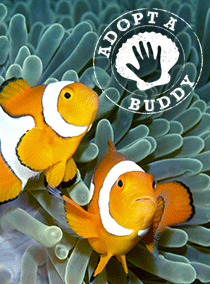
During your visit to SeaQuarium, don’t forget to take part in our free children’s Discovery Trail scratch card quiz. Pick up your free scratch card on arrival, answer the questions found throughout the Discovery Trail and place your entry into our Monthly Prize Draw. Winners are randomly selected from correctly answered entries at the end of every month, and win an Adopt a Buddy package of their choice!
Find out more...
Downloadable Worksheets for Schools & Groups...
To make the most of your visit we have a range of worksheets available. Our specific topic worksheets are ideal to use before, during and after your visit, and can be backed up with a Guided Tour for only £1 extra per person.
Find out more...