
ANIMAL A-Z…
Learn more about our amazing animal collection. Click on a letter below to find an animal or use our animal search:


Dab, Common (Limanda limanda)
Fun Facts... A female dabfish is extremely fertile, producing one million eggs!
Most of the dab's life is spend lying at the bottom, but they can swim rapidly for short distances.
Location... The common dab can be found along the Western European coasts of Iceland, from the Bay of Biscay to the White Sea. It is also found in the Baltic Sea, Gulf of Finland and southern North Sea.
Habitat... Inhabits sandy and muddy bottoms, in shallower water in the summer. In Autumn, they are found in waters up to 150 metres deep.
Diet...
Feeds upon hermit crabs, isopods, shrimp, mussels and worms.

Damsel, Blue star (Pomacentrus alleni)
Fun Facts... When mating, these fish form distinct pairs. Eggs are laid in the substrate and males tend to the nest, aerating the eggs and guarding them from predators.
Location... Found in the eastern Indian Ocean: Similan Island, Thailand and parts of Indonesia.
Habitat... Inhabit rubble and dead reef outer slopes, usually in small groups.
Diet...
Omnivorous, small invertebrates and vegetation.
Damselfish, Blue (Chrysiptera cyanea)
Recognised by the brilliant light-blue colour. This small (max 8.5cm) species exhibits a colour difference between sexes; juveniles and females usually have a small black spot at the rear base of the dorsal fin and lack yellow; males have a bright yellow snout and tail. This species live in social groups of one male and several females.
Fun Facts...
The male will guard the eggs by chasing away egg thieves such as wrasses and aerates them by swimming over the top.
Location...
Widespread in the Indo-West Pacific region.
Habitat...
Tropical coral reefs.
Diet...
Algae and small crustaceans.
Damselfish, Yellow tail (Chrysiptera parasema)
The yellow tail damselfish is an extremely vibrant fish with its jewel-blue body contrasting with its bright yellow tail. They grow up to about 8cm and have 13 dorsal spines. The pectoral fins can be yellow or blue.
Fun Facts...
The male is a doting father, protecting the eggs by driving off predators and aerating them by moving water over them with his fins.
Location...
Found in the western Pacific, including the Solomon Islands, northern Paua New Guinea, Philippines and Ryukyu Islands.
Habitat...
Inhabit coral-rich areas of sheltered lagoons and inshore coral reefs.
Diet...
Feeds mainly on zooplankton and algae.
Dart Frog, Dyeing (Dendrobates tinctorius)
Males are slimmer than females and have heart-shaped suction cups on its toes. Females appear plump and have rounded toes. They can grow to 6cm in length.
Fun Facts... Their bright colours warn about their toxicity, which they obtain from eating ants! Females may fight for males and the winner earns the right to stroke the male's snout and back with her forelegs in
courtship.
It has the name 'dyeing' from an old legend, in which native people used a secretion from the frog's skin to 'dye' the green feathers of a parrot, to red.
When the eggs are laid, the male tends to them and keeps them moist. After they hatch into tadpoles, the male and female carry them on their backs to water pools within plants.
Location... South America: Brazil, Suriname, French Guiana and parts of Guyana.
Habitat... Inhabits the forest floor, under the cover of rocks and moss around streams. Can also be found up to five metres in trees.
Diet...
Small arthropods, such as ants.

OPEN:
Weekdays 10am-5pm
(last admission 4pm)
Weekends 10am-6pm
(last admission 5pm)
ADMISSION:
Adult - £9.50 (16-64yrs)
Child - £7.50 (3-15yrs)
Under 3's - Free
Concessions - £8.50
(Senior Citizen, Disabled, Student).
See our Opening Times & Prices page for further info.

Staff at SeaQuarium Weston are getting ready to hold a week-long Love Oceans Event for Whitsun half-term.
MORE]
Welcome to our schools and groups fun page, showing the latest games, competitions & special offers...
FREE Discovery Trail Scratch Card for visitors!
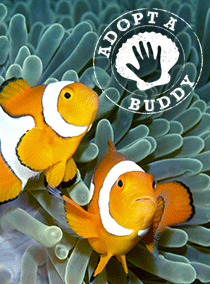
During your visit to SeaQuarium, don’t forget to take part in our free children’s Discovery Trail scratch card quiz. Pick up your free scratch card on arrival, answer the questions found throughout the Discovery Trail and place your entry into our Monthly Prize Draw. Winners are randomly selected from correctly answered entries at the end of every month, and win an Adopt a Buddy package of their choice!
Find out more...
Downloadable Worksheets for Schools & Groups...
To make the most of your visit we have a range of worksheets available. Our specific topic worksheets are ideal to use before, during and after your visit, and can be backed up with a Guided Tour for only £1 extra per person.
Find out more...