
ANIMAL A-Z…
Learn more about our amazing animal collection. Click on a letter below to find an animal or use our animal search:


Scat, Spotted (Scatophagus argus)
Fun Facts... The scientific name 'scatophagus' translates to 'excrement eater' and is used because of an unusual habit - the fish float near toilets in Southeast Asia and eat anything that shows up!
Location... Found in the Indo-Pacific, from Kuwait, north to Japan and south to New Caledonia
Habitat... Marine, fresh and brackish water in muddy coastal areas such as estuaries and mangroves.
Diet...
Feeds on worms, crustaceans and plant matter

Sea bass, European (Dicentrarchus labrax)
Reaching lengths of about 1 metre, the European sea bass is a large fish, covered by large, regular scales. Depending on its origin, its colour can range from dark grey, blue or green on its back with a white or pale yellow belly. Its flanks are silver-blue or can sometimes be pale gold or bronze. As juveniles, they are paler in appearance and have dark spots on the back and upper sides but these disappear by the time the fish is about a year old.
Fun Facts...
During the spawning season, the female sea bass can produce between a quarter and half a million eggs per kilogram of her own body weight!
Location...
Found along all European coasts from northern England to northern Africa and throughout the Mediterranean and Black Sea.
Habitat...
Inhabits coastal waters and estuaries around outcrops of rocks.
Diet...
Juveniles feed on invertebrates but as they mature, start eating smaller fish.
Seabream, Black (Spondyliosoma cantharus)
The black sea bream is a large oval-shaped fish sometimes growing up to about 40cm. They are silver in colouration with some individuals displaying 6-9 vertical bars on their sides. They have a single long dorsal fin and a large forked tail. Juveniles usually have yellow stripes on their sides and a dark edge to their tail.
Fun Facts...
The black sea bream starts its life as a female, then becomes male when they reach a length of about 20cm. However the white sea bream does the opposite and starts life as a male and becomes a female later.
Location...
Found mainly in the Eastern Atlantic, around the coasts of Great Britain and Scandinavia to Northern Namibia, Gibraltar, the Mediterranean and Black Sea and also South to the Canary Islands and Cape Verde.
Habitat...
Found over seagrass beds and rocky, sandy bottoms to a depth of about 300metres.
Diet...
Feeds on seaweeds, small invertebrates and crustaceans.
Shrimp, Cleaner (Lysmata amboinensis)
Other sea-creatures will often visit this little critter in "cleaning stations" to have parasites and dead skin removed from their bodies which the shrimp eats.
Cleaner shrimp are easy to spot as they have red and white stripes down the body and four long white antennae. The antennae are used to perform a "dance" which advertises that the shrimp is ready to clean! A relationship where both species benefit is called mutualism.
Fun Facts...
The cleaner shrimp has to be very trusting of its client; it will often clean the teeth and mouth of carnivorous fish, without being eaten!
Location...
Red Sea and Indo-Pacific ocean.
Habitat...
Shallow waters of tropical reefs.
Diet...
Scavenge on parasites and dead tissue on the bodies of many species.

Shrimp, Fire (Lysmata debelius)
Fun Facts... This shrimp is a hermaphrodite, so any two individuals may mate. They hang onto rock overhangs, waving their antennae, waiting for large fish to appear, so they can clean thier bodies, gills and fins.
Location...
Habitat... Found in the Indo-Pacific, including Bali and Sri Lanka
Diet...
Feeds on parasites, coral polyps and small invertebrates.
Smoothhound, Starry (Mustelus asterias)
The starry smoothhound is a slender species with two large dorsal fins, the first is larger than the second. It is very similar to the common smoothhound, apart from it is the only species of smoothhound to have white spots. These white spots however can be very faded which is why they can be commonly mistaken for the common smoothhound. The back and flanks are grey to grey-brown in colour and the spots are always white. The underside is also white and they have no dark spots or bands.
Fun Facts...
These sharks do not lay eggs like a lot of fish and give birth to live young. There is usually about 7 to 15 pups in a litter.
Location...
Found in the northeast Atlantic, from the British Isles and North Sea to the Canary Islands and the Mediterranean Sea.
Habitat...
Inhabits continental and insular shelves and is commonly found on or near sand or gravel bottoms, up to depths of 100 metres.
Diet...
Feed mainly on crustaceans but will eat some fish.
Snail, Giant African land (Achatina spp.)
Fun Facts... Giant land snails are hermaphrodites, meaning that one snail is both male and female.
Clutches of eggs can reach up to numbers of 1000!
During periods of drought, the land snail will go into a 'summer sleep' called aestivation and will seal themselves in their shell to prevent drying out.
Location... Is native mainly to East Africa, but has been introduced to other parts of Africa, the Indian Ocean islands, Asia, the Caribbean and Australia!
Habitat... The Giant African land snail can live in many areas, mostly humid, forest areas but can also be found in coast land, planted forest, shrub lands and even urban areas.
Diet...
Vegetables and fruits, they also need a calcium source
Snake, Corn (Pantherophis guttatus)
Fun Facts... They have over 100 teeth, which point backwards down the throat to minimise the chance of food escaping from them.
Location... It is not very likely to find corn snakes in the wild but they do thrive in captivity. In the wild they are found in eastern and southern central United States and northern Mexico. They are abundant in Florida.
Habitat... Deciduous forests are preferential, and rocky regions where crevices and logs provide good nesting opportunities. They are often found in fields, grassy areas and suburban areas.
Diet...
Carnivorous. Rodents and other small mammals.
Soldierfish, Big eye (Myripristis pralinia)
Reaching up to 20cm in length, the big eye soldierfish can be identified by its scarlet red colour, with white tips on its fins and its big eyes. It is also know as the the 'scarlet soldierfish' due to its colour, which can often change in different lights and if the fish feels threatened. They are rarely seen during the day as they are a very secretive fish, only coming out at night to feed.
Fun Facts...
Although rarely seen during the day, they can often be heard by divers by the different pops, grunts and clicks they make.
Location...
Distributed on the Indo-Pacific, from the east coast of Africa to French Polynesia, as far north as the Rykuyu Islands (off the southern coast of Japan) and as far south as New Caledonia (Off the eastern coast of Australia).
Habitat...
Nocturnal species found in caves, lagoons or under ledges of coral reefs.
Diet...
Zooplankton such as shrimp and crab larvae.
Squirrelfish, Striped (Sargocentron xantherythrum)
This vividly beautiful fish are so called for their nocturnal nature and bright red colouration, with horizontal white or silver stripes. They reach about 17cm in length and have very sharp gill spines and rough scales which often causes them to get snagged in fishing nets. They are a very social fish and are usually found in large schools.
Fun Facts...
Most squirrelfish are able to make sounds by vibrating their swim bladders. These noises are used to communicate danger to other squirrelfish and also to warn off other fish that threaten it.
Location...
Found in the Indo-Pacific with a large population found around Hawaii.
Habitat...
Usually inhabits caves and ledges in coral reefs during the day.
Diet...
Carnivorous: Crustaceans, worms and starfish.
Starfish, Common (Asterias rubens)
The common starfish or common sea star is the most frequent and familiar starfish in the north-east Atlantic. It has five arms and usually grows to between 10 to 30cm across, although larger specimens of up to 52cm across have been found! The common starfish is usually orange or brown and sometimes violet; those found in deep-water are often paler in colour.
Fun Facts...
If starfish are attacked by a predator, they can detach their arms and regenerate new ones!
Location...
Widespread around the coasts of the British Isles.
Habitat... The common starfish is well adapted for a wide variety of substrates, including coarse and shelly gravel and rock.
Diet...
Mainly feed on molluscs, especially bivalves and snails. Also scavenge on dead sea-creatures.
Starfish, Red knobbed (Protoreaster linckii)
The red knobbed starfish is also known by a variety of other names, such as African sea star, red spine sea star and African red knob sea star. This is a very distinctive species of starfish, with a thick grey body with lots of red tubercules found on each arm. These tubercules are connected by red lines, givng the starfish a grid-like appearance. This starfish can grow to a maximum diameter of 30cm.
Fun Facts...
The red knobbed starfish is most active during the day.
Location...
Indo-Pacific.
Habitat...
The red knobbed sea star is found in a range of locations, from shallow rock pools to reefs up to 100m deep.
Diet...
Eats a wide variety of other animals, such as soft coral, sponges, clams, other starfish and a variety of invertebrates.
Stingray, Motoro (Potamotrygon motoro)
The body of this ray is an oval disc and has a greyish-brown upper surface, covered with distinct orange spots. Its underside is white and males have a pair of "claspers" on each pelvic fin which look like fingers extending backwards from the inside of the fin. The motoro's main defence is the single spine barb at the tip of its tail which can deliver a very painful sting.
Fun Facts...
Unlike most other fish, these rays are live-bearers. The young fish develop inside and are born live and fully-formed. Whilst inside their mothers they feed on a milky substance and the nourishment of their yolk sacs.
Location...
Found mainly in South America, in Uruguay, Paraguay, Orinoco and Amazon River Basins.
Habitat...
Inhabits freshwater rivers mainly in calm waters and the sandy margins of lagoons, brooks and streams.
Diet...
Fish and invertebrates such as worms and crustaceans.

Sweetlips, Oriental (Plectorhinchus vittatus)
This fish undergoes a dramatic colour change from childhood to adulthood. Juveniles are reddish brown overall with white or cream coloured blotches, the adults are light overall with black lines down the body and yellow on the fins. Juveniles are solitary fish, while adults occur singly or in groups. They can reach lengths of up to 85cm.
Fun Facts...
Also known as 'grunts' due to their ability to make a grunting sound. This sound is produced by their teeth rubbing together which is then amplified by their air bladders.
Location...
Indo-West Pacific: East Africa to western Indian Ocean to Papua New Guinea and New Caledonia.
Habitat...
They inhabit coral reefs and inshore rocky reefs. They have a depth range between two and 25 metres.
Diet...
Crustaceans, snails, slugs and worms
OPEN:
Weekdays 10am-5pm
(last admission 4pm)
Weekends 10am-6pm
(last admission 5pm)
ADMISSION:
Adult - £9.50 (16-64yrs)
Child - £7.50 (3-15yrs)
Under 3's - Free
Concessions - £8.50
(Senior Citizen, Disabled, Student).
See our Opening Times & Prices page for further info.

Staff at SeaQuarium Weston are getting ready to hold a week-long Love Oceans Event for Whitsun half-term.
MORE]
Welcome to our schools and groups fun page, showing the latest games, competitions & special offers...
FREE Discovery Trail Scratch Card for visitors!
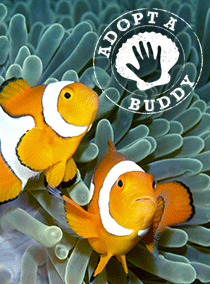
During your visit to SeaQuarium, don’t forget to take part in our free children’s Discovery Trail scratch card quiz. Pick up your free scratch card on arrival, answer the questions found throughout the Discovery Trail and place your entry into our Monthly Prize Draw. Winners are randomly selected from correctly answered entries at the end of every month, and win an Adopt a Buddy package of their choice!
Find out more...
Downloadable Worksheets for Schools & Groups...
To make the most of your visit we have a range of worksheets available. Our specific topic worksheets are ideal to use before, during and after your visit, and can be backed up with a Guided Tour for only £1 extra per person.
Find out more...